Unsubscribe
To unsubscribe, please enter your e-mail address below or send us an e-mail at unsubscribeeu@blueprintmedicines.com
Please enter a valid e-mail address
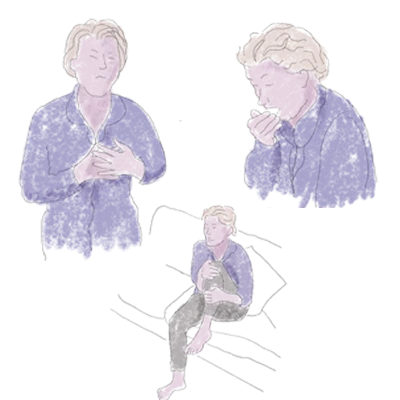
Living with SM impacts how individuals feel and function, going beyond what can be captured by objective measures or individual symptoms alone1,2
Everyday functioning in SM is not well correlated to objective measures of disease or specific individual symptoms,3 as the majority of patients experience diminished function1,2
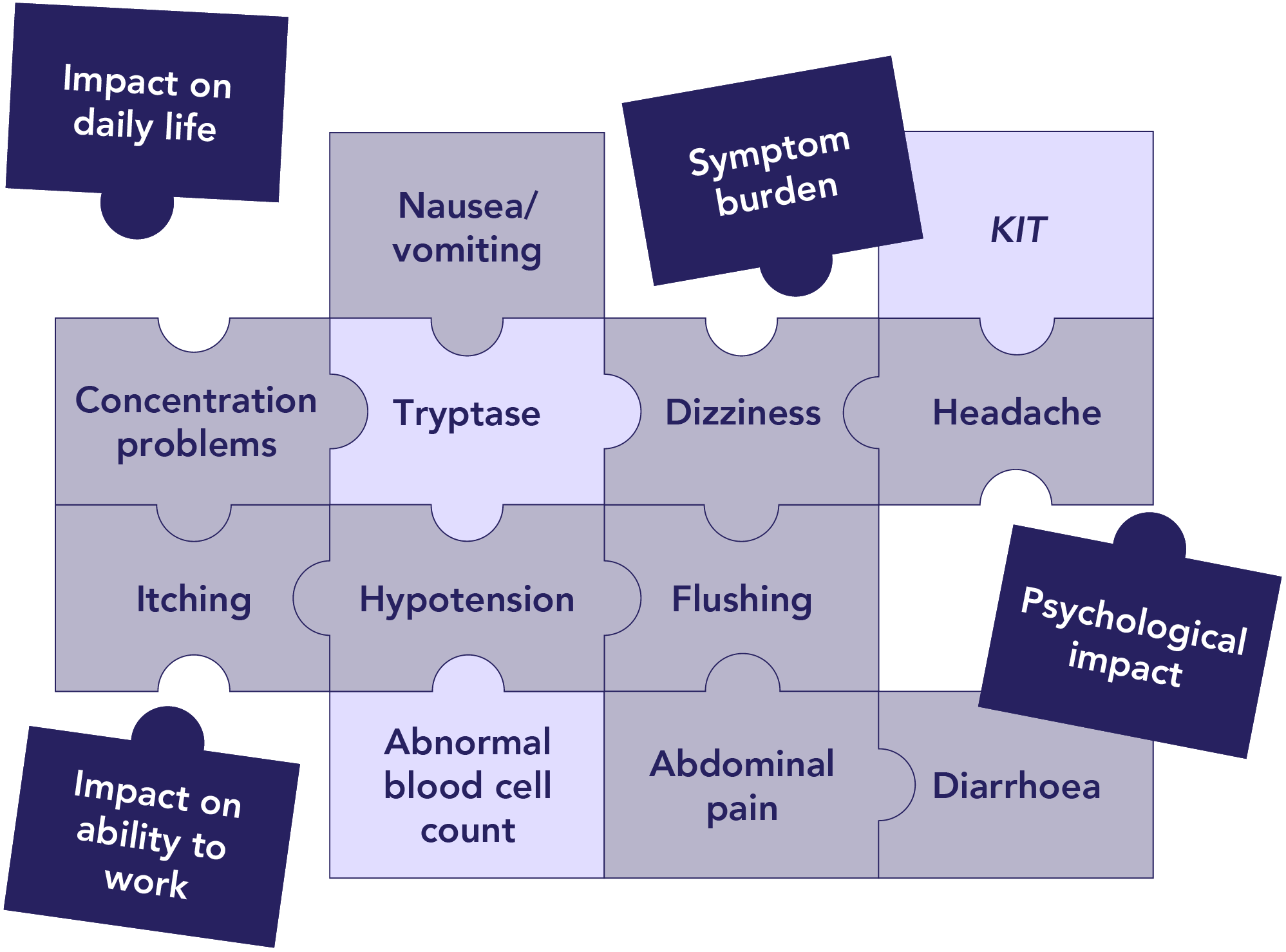
Patients living with SM report that the unpredictable symptoms can disrupt their everyday life and lead to social withdrawal, anxiety and frustration.1,2 In the PRISM study, 65% of healthcare professionals (HCPs) perceived patients living with SM experience a negative impact on their daily life:4*
Avoiding crowded or social places due to fear of unpredictable symptoms
Losing interest in hobbies or routines due to physical or cognitive changes
Constantly adapting routines to avoid triggers
Needing extensive planning for everyday tasks, such as walking, eating out or travelling
43% of ISM and 82% of Advanced SM patients reported an impact on their ability to work, with 24% and 46%, respectively, reducing their working hours, and 10% and 22% voluntarily quitting their jobs4†
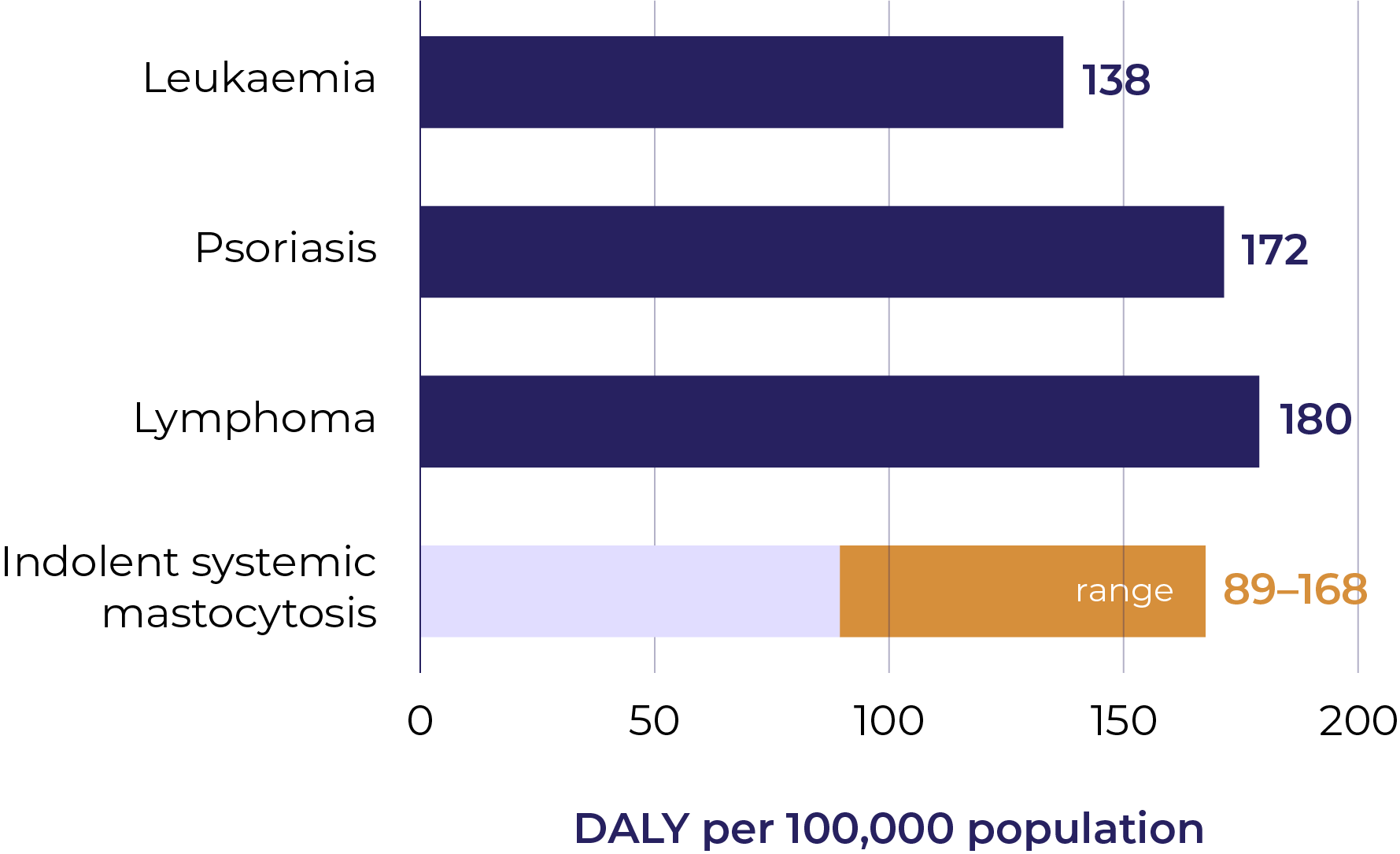
Disability-adjusted life years (DALY) measure disease burden by the combining number of years of life lost due to premature death and disability caused by the disease5
ISM has a high multi-symptom burden, with estimated population DALYs comparable to those of common and serious conditions such as leukaemia or psoriasis5‡
Patients with ISM report struggling to describe their symptoms, or feeling dismissed, which may lead to hesitation to share information and a delayed diagnosis1,2
*Based on results from the EU PRISM HCP survey (N=618); includes responses from HCPs who perceived that SM affected their patients’ lives “quite a bit” or “a great deal”.4
†Based on results from the EU PRISM survey from patient respondents who reported an SM diagnosis (N=540).4
‡Based on prospective and retrospective data of 168 patients with ISM recruited at a French reference centre for mastocytosis (CEREMAST).5
Levedahl KH, et al. Eur J Oncol Nurs. 2022;60:102172.
Blueprint Medicines. Data on file.
Spolak-Bobryk N, et al. Postepy Dermatol Alergol. 2022;39(4):688–696.
Triggiani M, et al. Clin Exp Allergy. 2025;55(9):784–794.
Mounié M, et al. J Allergy Clin Immunol Pract. 2025;13(4):923–929.
Levedahl KH, et al. Prim Health Care Res Dev. 2022;23:e54.
Want to learn more about Systemic Mastocytosis?
Visit our Resources Page for more information.
Take me there!Sign up for email updates, news and resources on Systemic Mastocytosis from Blueprint Medicines, as well as other diseases relevant to your medical specialisation. We will also share information relevant to Blueprint Medicines’ products and other promotional activities and events

You can unsubscribe at any time by sending us an email at unsubscribeeu@blueprintmedicines.com or by clicking on the Unsubscribe link in the footer of this website or each future email communication by Blueprint Medicines